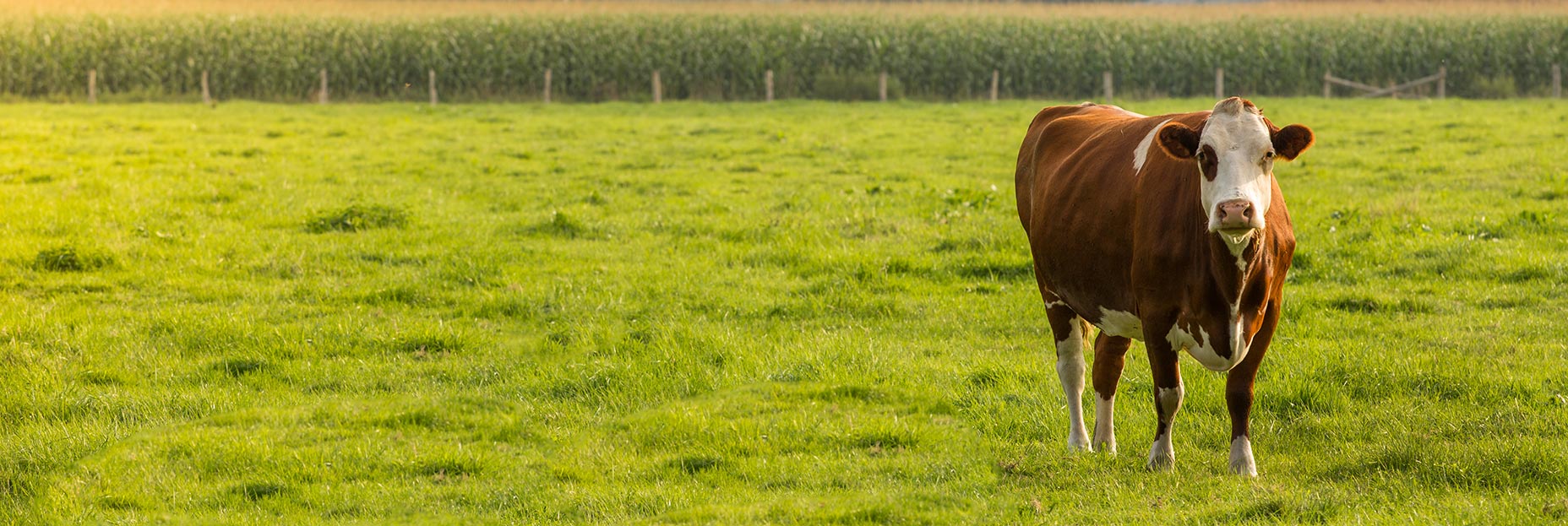
Methane is produced by the breakdown or decay of organic material and can be introduced into the atmosphere by either natural processes – such as the decay of plant material in wetlands, the seepage of gas from underground deposits or the digestion of food by cattle – or human activities – such as oil and gas production, rice farming or waste management.
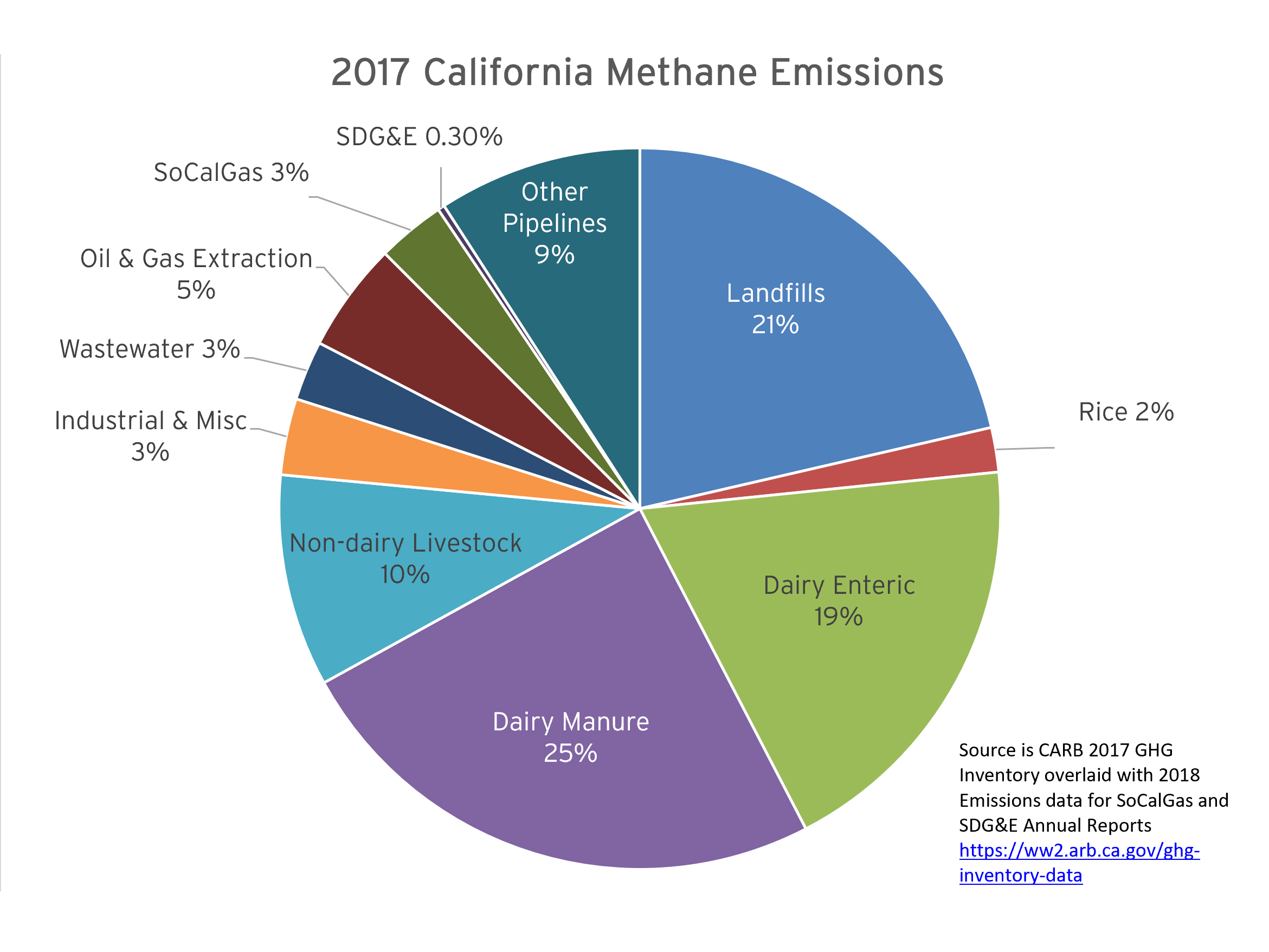
(Source: 2017 California Air Resources Board Methane Inventory)
Food production and the human waste stream account for about half of all methane in the atmosphere, nationwide. Those two industries account for 80 percent of methane across the state, especially due to the large presence of dairy and cattle farms in California. In fact, taking a broader view of all the greenhouse gases generated across California, the methane emissions from SCG and SDG&E's natural gas distribution systems equate to only 3.3 percent of those greenhouse gases.
SoCalGas® is actively exploring technologies to capture non-fossil sources of methane and use its pipeline system to deliver the methane to customers as a fuel. Use of non-fossil, or renewable, natural gas reduces methane emissions and use of fossil fuels.